
Call: 08045801297
 Send Inquiry
 Send Inquiry
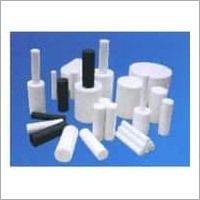
Ceramic Filled Ptfe
Price 100 INR/ Meter
MOQ : 10 Meters
Ceramic Filled Ptfe Specification
- Type
- Ceramic Filled PTFE
- Material
- Ceramic Filled Polytetrafluoroethylene
- Density
- 2.30 Gram per cubic centimeter(g/cm3)
- Corrosion Protection
- Excellent
- Tensile Strength
- Above 15 MPa
- Thickness
- 0.5 mm to 10 mm
- Melting Point
- 327°C
- Size
- Customizable
- Width
- 10 mm to 1500 mm
- Length
- 1 m to 10 m
- Packaging Type
- Standard Export Packing
- Manufacturing Technique
- Molding, Machining
- Dielectric Strength
- 60 kV/mm
- Surface Finish
- Smooth
- Water Absorption
- <0.01%
- Compressive Strength
- 120 MPa
- Chemical Resistance
- Resistant to most chemicals and solvents
- Shape
- Sheet, Rod, Tube, Custom Machined Parts
- Application
- Gasket, Seal, Bearing, Insulation, Valve Seats
- Coefficient of Friction
- 0.07
- Elongation at Break
- 200%
- Color
- White
Ceramic Filled Ptfe Trade Information
- Minimum Order Quantity
- 10 Meters
- FOB Port
- Ahmedabad
- Supply Ability
- 500 Meters Per Week
- Delivery Time
- 1 Week
- Sample Available
- Yes
- Sample Policy
- Contact us for information regarding our sample policy
- Packaging Details
- Plastic Bag Packing, Corrugated Box Packing, Shrink Packing, Customization As per Customer Requirement
- Main Domestic Market
- All India
- Certifications
- ISO 9001 : 2008 Certified Company
About Ceramic Filled Ptfe
With the assistance of our team of expert personnel, we are engaged in providing an assorted range of Ceramic Filled PTFE. Known for enhanced compressive strength, toughness and wear & tear resistance, this product is precision engineered in compliance with international standards utilizing quality approved raw materials. We offer this PTFE product in various specifications to the clients. The product can also be customized as per client-specific needs. This Ceramic Filled PTFE is offered at very nominal rates to the clients.
Enhanced Performance with Ceramic Filler
Ceramic Filled PTFE is engineered for advanced mechanical, thermal, and electrical properties. The addition of ceramic fillers significantly improves compressive and tensile strengths, wear resistance, and dimensional stability, while maintaining PTFEs renowned chemical inertness and low-friction surface. These attributes extend the life of parts subjected to challenging operational conditions.
Versatile Applications Across Industries
With its smooth finish, excellent dielectric strength, and resistance to corrosion and chemicals, Ceramic Filled PTFE is well-suited for a myriad of applications. It is commonly utilized as gaskets, seals, bearings, insulation components, and valve seats in electrical, chemical, and mechanical industries. The adaptability in forming sheets, rods, tubes, and custom parts enhances its versatility.
Manufacturing and Customization Capabilities
Produced through advanced molding and machining processes, Ceramic Filled PTFE can be tailored in width (10 mm to 1500 mm), thickness (0.5 mm to 10 mm), and length (1 m to 10 m). Standard export packing ensures safe worldwide transit. The material is supplied by top exporters, manufacturers, and suppliers based in India, meeting the specifications required for unique industrial needs.
FAQs of Ceramic Filled Ptfe:
Q: How is Ceramic Filled PTFE manufactured and what shapes are available?
A: Ceramic Filled PTFE is produced using molding and precision machining techniques. It is available in standard shapes such as sheet, rod, tube, and can also be provided as custom-machined parts to meet specific application requirements.Q: What are the primary benefits of using Ceramic Filled PTFE over regular PTFE?
A: The ceramic filler enhances the materials compressive and tensile strength, dimensional stability, and abrasion resistance, while retaining PTFEs low friction, high chemical resistance, and excellent dielectric properties. This makes it particularly reliable for demanding industrial environments.Q: Where can Ceramic Filled PTFE be effectively used?
A: This material is ideal for use in electrical insulation, gaskets, seals, bearings, and valve seats. Its chemical resistance and durability make it a preferred choice in chemical processing, electronics, mechanical engineering, and valve manufacturing sectors.Q: What is the typical process for customizing Ceramic Filled PTFE components?
A: Customization involves selecting the required dimensions (width from 10 mm to 1500 mm, thickness from 0.5 mm to 10 mm, length from 1 m to 10 m) and the appropriate shape. The manufacturer then uses molding or CNC machining to achieve the desired specifications, ensuring a smooth finish.Q: How resistant is Ceramic Filled PTFE to chemicals and corrosion?
A: Ceramic Filled PTFE is highly resistant to most chemicals and solvents, providing excellent corrosion protection. This property ensures long-term reliability even in aggressive environments, including those exposed to acids, bases, and organic solvents.Q: When should you consider using Ceramic Filled PTFE for your application?
A: Consider Ceramic Filled PTFE when applications demand superior mechanical strength, low friction, high dielectric strength, and exceptional resistance to chemicals and water absorption. Its especially beneficial for components that must withstand harsh operational conditions while maintaining performance.Q: What makes Ceramic Filled PTFE suitable for gasket and seal manufacturing?
A: The materials high compressive strength, flexibility (with 200% elongation at break), low water absorption, and chemical inertness ensure reliable sealing and gasketing performance even under fluctuating temperatures and pressures.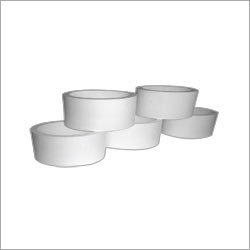
Tell us about your requirement

Price:
Quantity
Select Unit
- 50
- 100
- 200
- 250
- 500
- 1000+
Additional detail
Mobile number
Email

More Products in PTFE Products Category
Ptfe Balls
Price 100 INR / Meter
Minimum Order Quantity : 10 Meters
Thickness : Depends on ball diameter
Corrosion Protection : Other, Excellent chemical resistance
Type : Solid Ball
Width : Custom as per ball diameter
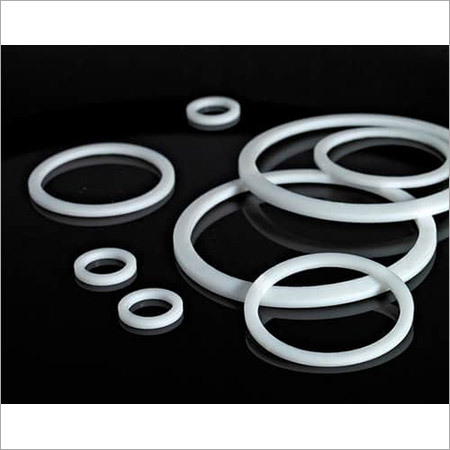
PTFE Washer
Price 100 INR / Meter
Minimum Order Quantity : 10 Meters
Thickness : 0.5 mm to 10 mm
Corrosion Protection : Other, Excellent Chemical Resistance
Type : Flat Washer
Width : Custom as per requirement
Ptfe Guide Strip
Price 100 INR / Meter
Minimum Order Quantity : 10 Meters
Thickness : 0.5 mm to 5 mm
Corrosion Protection : Other, Excellent
Type : Guide Strip
Width : 10 mm to 100 mm
PTFE MOULD
Price 100 INR / Meter
Minimum Order Quantity : 10 Meters
Thickness : 0.5 mm to 100 mm
Corrosion Protection : Other, High resistance to chemicals and corrosion
Type : PTFE Moulded Sheet
Width : Up to 1500 mm

Contact Details
GST : 24AABCF9517D1ZW
- 5/8/1, Dasrath Estate, Near Revabhai Estate, C.T.M Cross Roads,Ahmedabad - 380026, Gujarat, India
- Phone :08045801297

 Send Inquiry
|


Developed and Managed by Infocom Network Private Limited.
