
Call: 08045801297
 Send Inquiry
 Send Inquiry
PTFE Pipes
Price 100 INR/ Meter
MOQ : 10 Meters
PTFE Pipes Specification
- Yield Strength
- 11 MPa
- Sealing Type
- Leak Proof
- Diameter
- Customized
- Thread Type
- NPT / BSP
- Tensile Strength
- 21 MPa
- Flexibility
- Semi-Flexible
- Connection Type
- Threaded / Socket Weld
- Bend Radius
- Minimum 5x OD
- Temperature Range
- -200C to +260C
- Tolerance
- 0.1 mm
- Coating Type
- Uncoated
- Product Type
- PTFE Pipe
- Material
- Polytetrafluoroethylene (PTFE)
- Connection
- Flanged / Plain End
- Shape
- Round
- Standard
- ASTM D3296
- Surface Treatment
- Smooth Finish
- Outer Diameter
- 15 mm 100 mm
- Section Shape
- Circular
- Length
- 1 m 3 m
- Thickness
- 2 mm 8 mm
- Color
- White
- Usage
- Chemical Transport / Laboratory
- Rated Pressure
- Up to 10 bar
- Material Grade
- Virgin PTFE
- Application
- Chemical, Food, Medicine, Electronics
- Storage Requirements
- Store in cool, dry place away from sunlight
- Weight
- Varies with size, approx. 0.5 kg/m
- Manufacturing Method
- Extruded / Molded
- Hydrostatic Pressure Testing
- Available
- Chemical Resistance
- Highly Resistant to Acids, Alkalis, and Solvents
- Corrosion Resistance
- Superior
- Burst Pressure
- Up to 25 bar
- UV Resistance
- Excellent
- Maintenance
- Minimal, easy to clean
- Permeability
- Low Gas Permeability
- Non-stick Surface
- Yes
- Density
- 2.1 - 2.3 g/cm3
- Electrical Insulation
- Excellent
PTFE Pipes Trade Information
- Minimum Order Quantity
- 10 Meters
- FOB Port
- Ahmedabad, Airport
- Supply Ability
- 500 Meters Per Week
- Delivery Time
- 1 Week
- Sample Available
- Yes
- Sample Policy
- Contact us for information regarding our sample policy
- Packaging Details
- Plastic Bag Packing, Corrugated Box Packing, Shrink Packing, Customization As per Customer Requirement
- Main Domestic Market
- Chandigarh, Himachal Pradesh, Sikkim, Manipur, , South India, North India, East India, West India, Andaman and Nicobar Islands, Assam, Arunachal Pradesh, Bihar, Delhi, Gujarat, Goa, Haryana, Jammu and Kashmir, Jharkhand, Karnataka, Madhya Pradesh, Maharashtra, Mizoram, Meghalaya, Nagaland, Odisha, Punjab, Rajasthan, Tamil Nadu, Tripura, Uttar Pradesh, West Bengal, Pondicherry, Uttarakhand, Daman and Diu, Dadra and Nagar Haveli, Lakshadweep, Telangana, Andhra Pradesh, Kerala, Central India, Chhattisgarh, All India
- Certifications
- ISO 9001 : 2008 Certified Company
About PTFE Pipes
We have uniquely positioned ourselves as a dependable firm, engaged in manufacturing and supplying PTFE Pipes. These pipes are used for transferring chemicals, strong acids, corrosives or other hazardous materials at high temperatures. We manufacture these pipes using quality grade PTFE, procured from reputed vendors. PTFE Pipes enhance better working conditions as leakage does not occur and subsequent harmful gases and vapors do not evaporate in the atmosphere. We offer these pipes at cost effective prices to clients.
Features:
- Leakage proof
- Resistant to chemical
- Can withstand high temperature
Exceptional Chemical and Temperature Resistance
PTFE pipes are crafted to endure highly aggressive environments, offering top-tier resistance to acids, alkalis, and solvents. Capable of operating across a wide temperature range of -200C to +260C, these pipes maintain structural integrity under extreme conditions, making them ideal for chemical transport and laboratory applications.
Precision Engineering and Versatility
Manufactured through advanced extrusion or molding processes, our PTFE pipes meet stringent ASTM D3296 standards, ensuring tight tolerances of 0.1 mm. Their non-stick, smooth white finish facilitates minimal maintenance, and varied connection typessuch as NPT/BSP threading or flanged/plain endsenable flexible integration into diverse systems.
Reliable and Safe for Sensitive Applications
Featuring low gas permeability, leak-proof sealing, and excellent electrical insulation, PTFE pipes are a preferred choice in sensitive environments like pharmaceuticals, food processing, and electronics. Their superior UV and corrosion resistance further ensure longevity even when exposed to harsh outdoor or industrial conditions.
FAQs of PTFE Pipes:
Q: How should PTFE pipes be stored to maintain their quality?
A: PTFE pipes should be stored in a cool, dry place away from direct sunlight to preserve their physical properties and prevent any surface degradation. This practice ensures their longevity and maintains excellent performance standards.Q: What benefits do PTFE pipes offer over other materials for chemical applications?
A: PTFE pipes provide unmatched chemical resistance, superior corrosion protection, and excellent electrical insulation. Their non-stick surface and low gas permeability make them ideal for safely transporting aggressive chemicals in laboratory and industrial settings.Q: When is hydrostatic pressure testing available for PTFE pipes?
A: Hydrostatic pressure testing can be requested during the procurement process or upon installation to verify that the pipes conform to specified burst and rated pressure requirements. This ensures the systems safety and reliability in service.Q: Where are PTFE pipes most commonly used?
A: PTFE pipes are widely used in the chemical, food, pharmaceutical, and electronics industries, where stringent standards for purity, chemical resistance, and leak-proof operation are essential. Their versatility also extends to laboratory and industrial transport systems.Q: What is the typical process for connecting PTFE pipes in a system?
A: PTFE pipes can be connected using threaded options (NPT/BSP), socket welds, or by selecting flanged/plain end fittings. The choice depends on system requirements, ensuring a secure, leak-proof installation suitable for various operational pressures.Q: How easy is it to maintain and clean PTFE pipes?
A: Due to their inherently smooth and non-stick surface, PTFE pipes are extremely easy to clean and require minimal maintenance. This property is particularly beneficial in applications demanding high levels of cleanliness and hygiene, such as pharmaceuticals and food processing.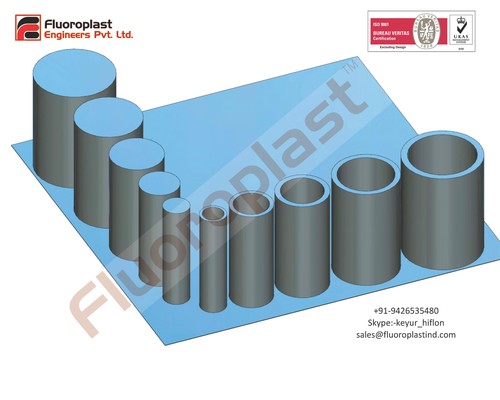
Tell us about your requirement

Price:
Quantity
Select Unit
- 50
- 100
- 200
- 250
- 500
- 1000+
Additional detail
Mobile number
Email


Contact Details
GST : 24AABCF9517D1ZW
- 5/8/1, Dasrath Estate, Near Revabhai Estate, C.T.M Cross Roads,Ahmedabad - 380026, Gujarat, India
- Phone :08045801297

 Send Inquiry
|


Developed and Managed by Infocom Network Private Limited.
